
Potato Powder Making Machine
Potato Powder (also
known as Potato Flour or Dehydrated Potato Flakes) at an industrial scale, the
process must focus on preserving the starch structure and preventing oxidation
(browning).
For a continuous system, here are the details for a line integrated with a Continuous Belt Dryer.
1. Process Flow
& Machine Details
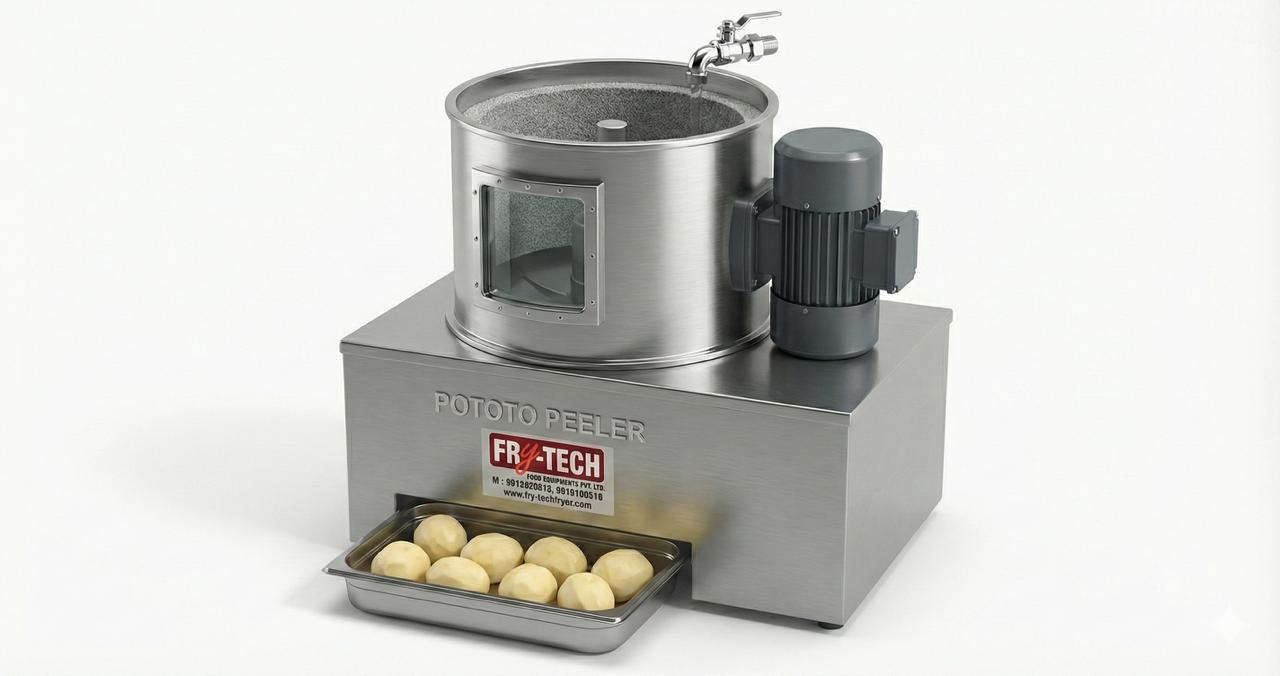
Step 1: Industrial
Potato Peeler (Abrasive Type)
- Function: Continuous removal of skin using
silicon carbide rollers.
- Capacity: Matched to your dryer input
(e.g., 2000 kg/hr raw to get ~400-500 kg powder).
- Features: Includes a screw auger to move
potatoes forward while water jets wash away the peel.
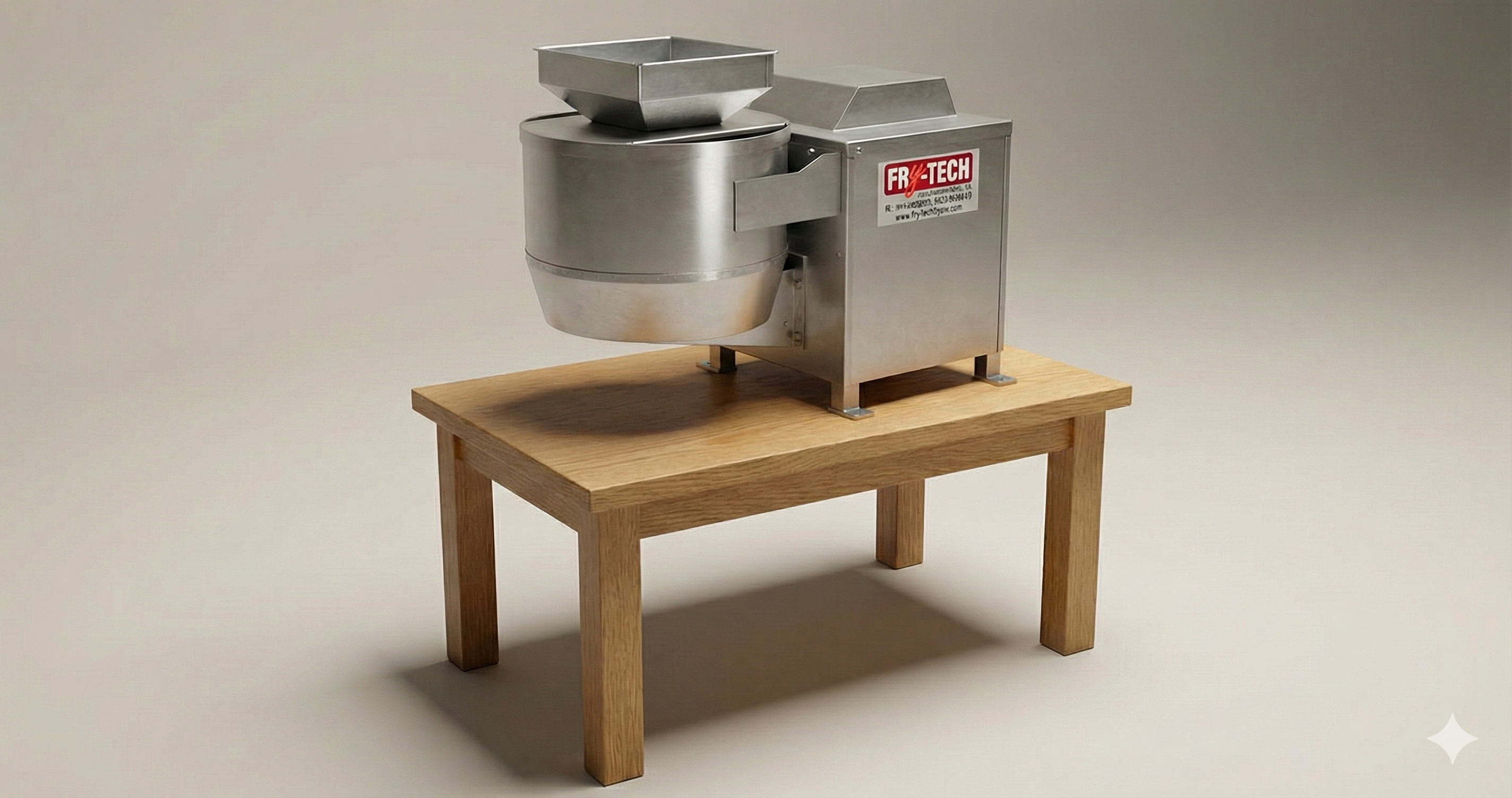
Step 2: High-Speed
Centrifugal Slicer
- Function: Slicing potatoes into uniform
thickness (usually 2mm–5mm).
- Detail: Uses a rotating head with
stationary blades to ensure smooth surfaces, which helps in uniform
blanching and drying.
Step 3: Continuous
Steam Blancher
This is the most
critical machine for powder quality.
- Mechanism: A screw or slat-belt conveyor
carries slices through a tunnel of saturated steam (approx. 90°C – 95°C).
- Purpose: It deactivates enzymes
(peroxidase) to prevent the powder from turning grey and partially
gelatinizes the starch.
- Water Saving: Steam blanching is preferred
over water blanching for powder because it retains more solids and uses
less water.
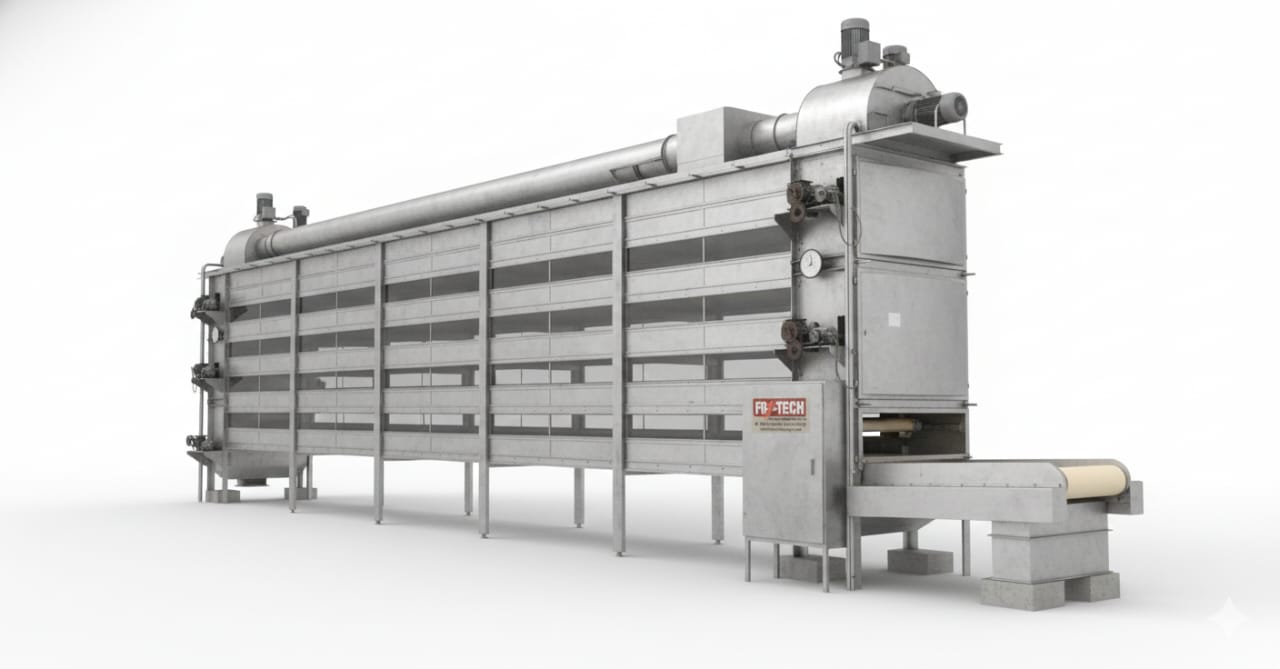
Step 4: Continuous
Multi-Layer Belt Dryer
- Design: Usually a 3-layer or 5-layer mesh
belt system.
- Airflow: Cross-flow hot air (circulated by
high-pressure fans).
- Zones: * Zone 1: High Temp (80°C)
for rapid initial moisture removal.
- Zone 2: Moderate Temp (60°C) for deep core
drying.
- Final Moisture: Reduces potato slices from
80% moisture to under 10%.
Step 5: Impact
Pulverizer with Dust Collector
- Function: Grinds the dried
"chips" into a fine 60–100 mesh powder.
- Cooling: Often equipped with a
water-cooled jacket to prevent the starch from "burning" or
clumping due to heat generated during grinding.
2. Technical
Specifications (Sample 500 kg/hr Line)
|
Component |
Specification |
|
Total Line Length |
60 – 80 Feet |
|
Belt Dryer Area |
40 – 60 Square
Meters |
|
Power Consumption |
60 HP – 90 HP
(Total Line) |
|
Heat Source |
Steam Boiler or
Thermic Fluid Heater |
|
Material of
Construction |
Full SS 304 (Food
Grade) |
|
Control System |
Central PLC Panel
with VFDs for all conveyors |
3. Key Quality
Requirements
- Color Retention: Sodium Metabisulfite
(SMS) is often sprayed onto slices after blanching but before drying to
maintain a bright white color.
- Uniformity: The belt dryer must have
"turn-over" points (where slices drop from one belt to the next)
to prevent wet spots in the center of the slices.
- Hygroscopic Handling: Potato powder
absorbs moisture instantly. The grinding and packaging area must be
humidity-controlled.
4. Comparison:
Potato Starch vs. Potato Powder
It is important to
distinguish between these two:
- Potato Powder (Your Request): Made by
drying the whole potato (fiber + starch). Used for snacks
(Pringles-style), bakeries, and thickeners.
- Potato Starch: Made by crushing and extracting
only the starch. Used for industrial and high-end food textures.

