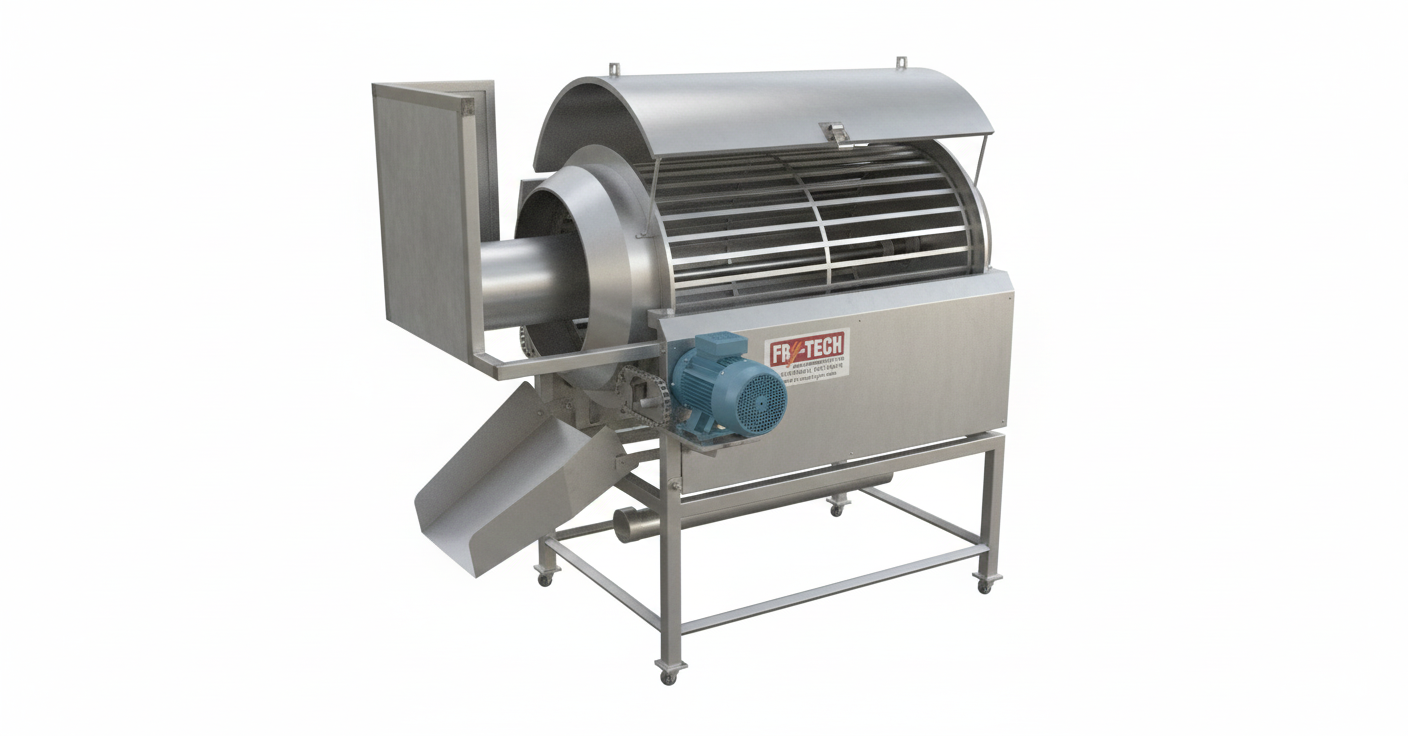
Grain Washer
Drum Type Grain
Washer (Rotary Drum Washer) is an industrial cleaning machine used for wheat,
rice, pulses, and seeds. It is specifically designed to remove surface dirt,
mud, fine dust, and light impurities through a combination of mechanical
tumbling and water spray.
1. Technical
Specifications (500 to 2,000 kg/hr)
|
Feature |
Details |
|
Capacity |
500 kg/hr to
2,000 kg/hr (Continuous) |
|
Material |
Full SS 304 (Food
Grade) for hygiene and corrosion resistance |
|
Drum Type |
Perforated
cylindrical drum with internal screw (Auger) |
|
Motor Power |
2 HP to 5 HP
(depending on capacity) |
|
Water Requirement |
High-pressure
spray nozzles with water recycling system |
|
Drum Speed |
10 to 30 RPM
(Variable speed via VFD) |
2. How the Drum
Washer Works
- Feeding: Raw grains enter the inclined
rotating drum via a hopper or conveyor.
- Tumbling Action: As the drum rotates, the
grains are lifted and tumbled. Internal baffles or a helix screw move the
grains forward.
- High-Pressure Spray: Water is sprayed from
a central pipe inside the drum. This "scrubbing" action loosens
mud and stones attached to the grain.
- Separation: Dirt and wastewater pass
through the drum's perforations and
are collected in a bottom tank, while the clean grains travel to the
discharge end.
- De-watering (Optional): Many units include
a final "spin" section or a centrifugal blower at the outlet to
remove excess surface water before the grain moves to a roaster or dryer.
3. Key Benefits for
Your Setup
- Uniform Cleaning: Unlike batch washing,
every grain gets equal exposure to water and friction.
- Low Water Waste: Most industrial drum
washers include a Filter & Recirculation Tank, allowing you to reuse
water for multiple cycles.
- Adjustability: You can change the drum's
angle and rotation speed. For example, Rice needs a gentle wash, while Dirty
Wheat might need a longer retention time and higher speed.

