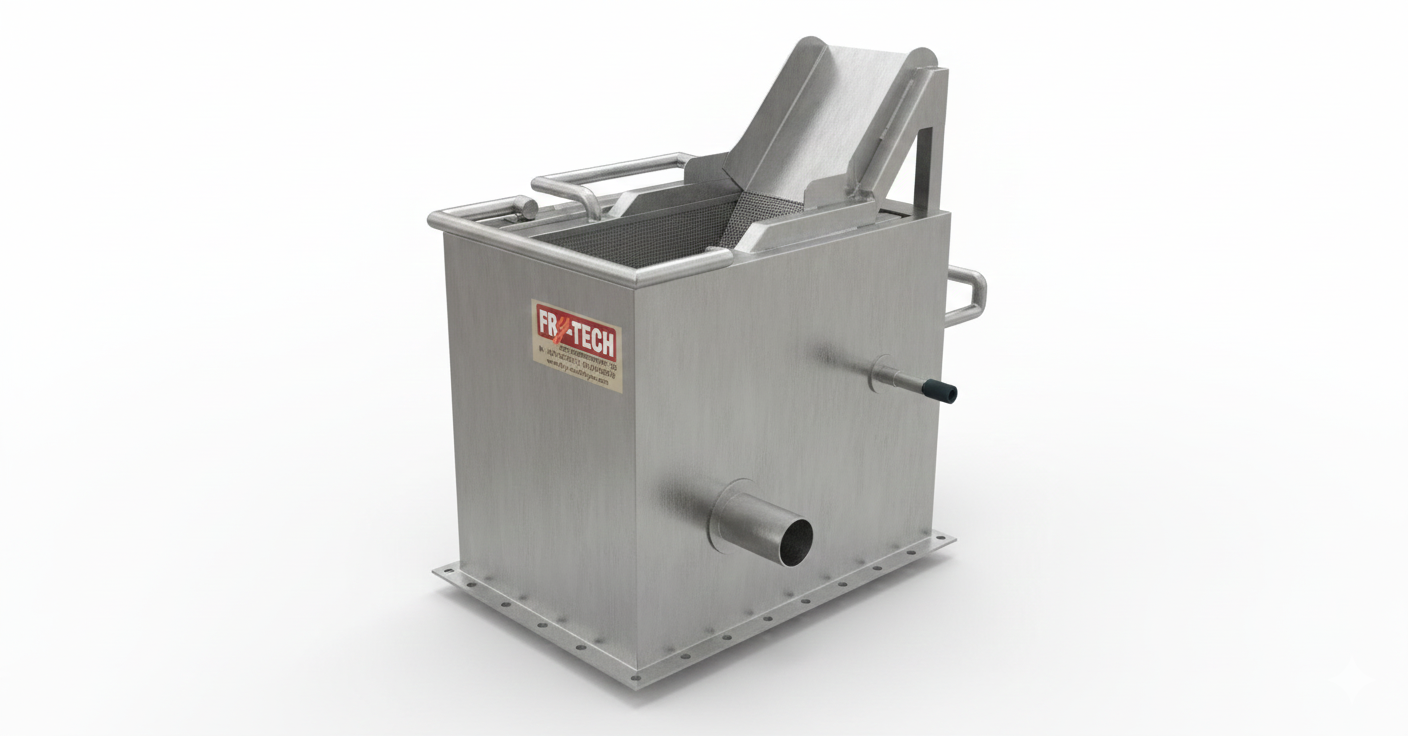
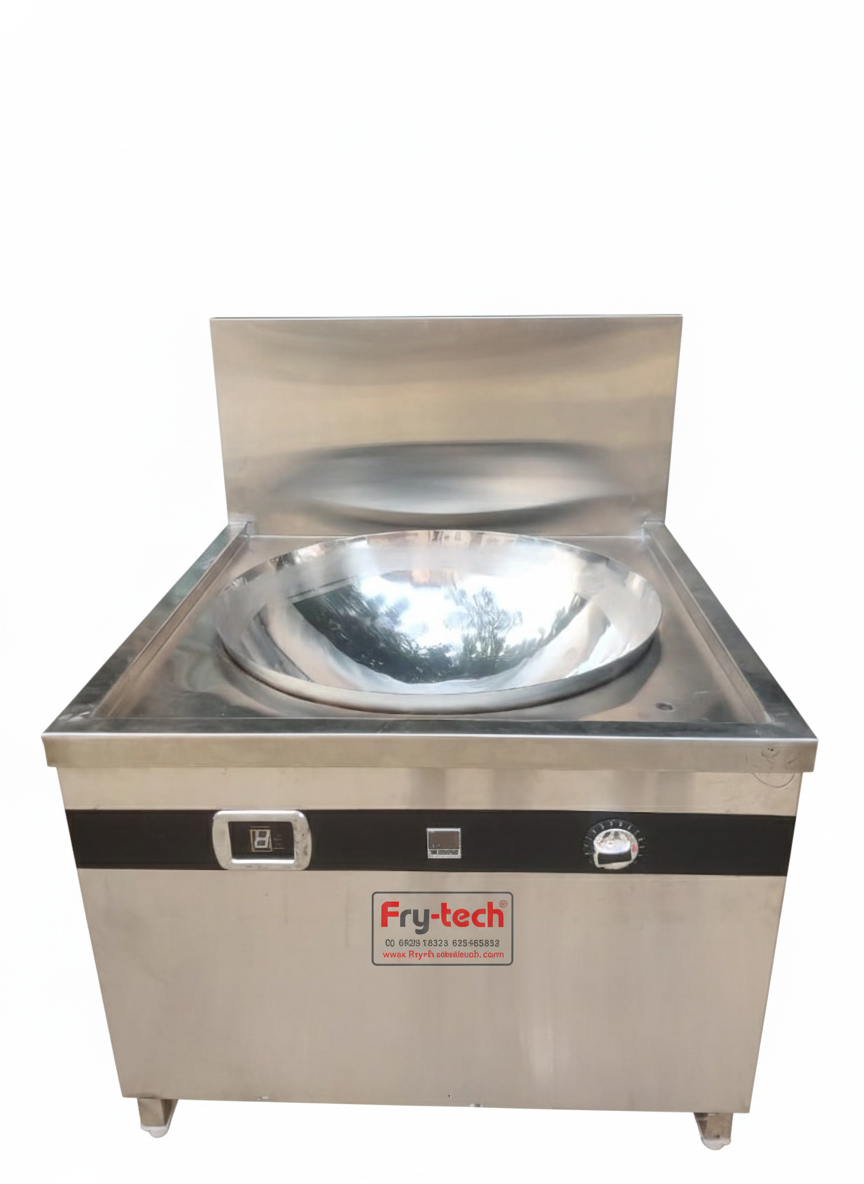
Direct Heat Gas / Disel Kadai Fryer
₹ 250000.00/-
Direct
Heat Gas / Disel Kadai Fryer
A Direct
Heat Gas/Diesel Kadai Fryer is a specialized heavy-duty industrial machine
designed primarily for the large-scale frying of snacks like Namkeen, chips,
Samosas, and Bhujia. Unlike modern "indirect" systems that use heat
exchangers, this machine applies heat directly to the bottom of the
frying vessel (Kadai), making it a robust and cost-effective choice for snack
manufacturers.
Below
is the full detail regarding its construction, fuel systems, and technical
specifications.
1.
Core Design & Construction
· Vessel
Shape: Usually available in Circular (traditional Kadai)
or Rectangular shapes. Circular models are preferred for manual
stirring of Namkeen.
· Material: Built
with SS 304 (Food Grade Stainless Steel) to ensure hygiene and
resistance to corrosion from oil and moisture.
· Insulation: The
outer body is typically insulated with ceramic wool or glass wool to prevent
heat loss, protecting the operator and saving fuel.
· Tilting
Mechanism: Many modern models include a manual or motorized tilting system
to easily unload the fried snacks once they are ready.
2.
Multi Fuel System (Diesel Gas – Wood-Coal-Wood Pellet- Rice Husk
–Electric-Induction & Thermic Fluid Heating Systems )
This
machine is unique because it can be configured to run on two different fuel
types, often using a Multifuel Burner And Hearter Systems :
Versatile
Heating Solutions (Multi-Fuel System)
At FRY-TECH
FOOD EQUIPMENTS PVT.LTD, we understand that energy availability and cost vary
by region. Our machinery is engineered to be fuel-agnostic, giving you the
flexibility to choose the most economical and efficient heating source for your
production line.
Available
Fuel & Heating Options:
|
Category |
Fuel / System Type |
|
Traditional & Biomass |
Wood, Coal, Wood Pellets, Rice Husk |
|
Liquid & Gas |
Diesel, LPG, Natural Gas |
|
Advanced Electric |
Standard Electric, High-Efficiency
Induction |
|
Industrial Heat Transfer |
Thermic Fluid Heating Systems (Indirect
Heating) |
Why
Choose Our Multi-Fuel Systems?
- Operational Flexibility: Switch
between fuels based on market prices and local availability to maintain
low production costs.
- Precision Temperature
Control: Our systems (especially Induction and Thermic Fluid) ensure
uniform heat distribution, preventing oil degradation and maintaining
product crispness.
- Energy Efficiency: Optimized
combustion chambers and heat exchangers ensure maximum heat transfer with
minimal fuel wastage.
- Sustainability: Options
for biomass fuels like rice husk and wood pellets allow for eco-friendly
snack production.
3. Technical
Specifications
Typical
values based on industrial standards:
|
Feature |
Specification |
|
Capacity |
25 kg to 100 kg per hour (depends on
product) |
|
Oil Holding |
30 Liters to 150+ Liters |
|
Power Consumption |
0.25 HP to 1.5 HP (for the
blower/motor) |
|
Fuel Options |
LPG, PNG, Diesel, or Wood/Pellet
(optional) Electric - Induction |
|
Temperature Control |
Digital temperature controller with
auto-cut off |
|
Automation |
Available in Manual, Semi-Automatic, or
Fully Automatic |
|
Dimensions |
Ranges from 36" (3ft) to 60"
(5ft) diameter |
4.
Key Advantages
· High
Thermal Efficiency: Direct heating allows the oil to reach frying
temperatures ($160^{\circ}\text{C}$ to $190^{\circ}\text{C}$) very
quickly.
· Low
Maintenance: Because there are no complex internal tubes (like in heat
exchangers), the Kadai is very easy to clean and maintain.
· Versatility: Ideal
for a wide range of products including Poha, Gathiya, Sev, Potato Chips, and
Banana Chips.
· Safety
Features: Often equipped with an Automatic Flame Failure system
and temperature sensors to prevent oil from burning or catching fire.
5.
Components Included
1. Main
Frying Vessel (Kadai): Heavy-bottomed to prevent oil scorching.
2. Burner
Unit: A high-pressure gas burner or a diesel burner with a fuel pump.
3. Blower: To
provide the air-fuel mixture needed for intense heating.
4. Control
Panel: Houses the temperature display, on/off switches, and safety alarms.
5. Exhaust/Chimney: To
vent out combustion gases (especially important for Diesel models).

