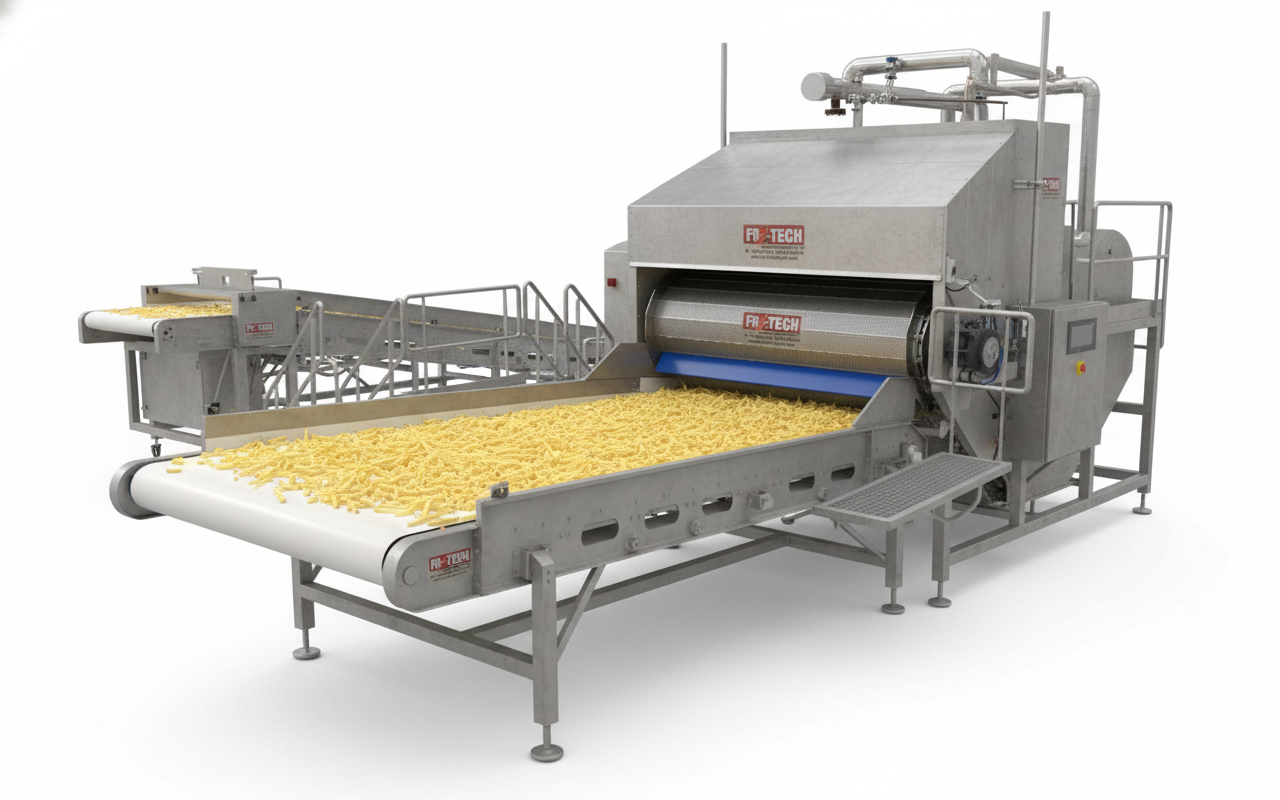
Noodle Gluten Fryer Machine
Noodle Gluten Fryer (often called a Fried Gluten Ball Machine or Seitan
Fryer) is used to produce "Fried Gluten" (Mian Jin), a popular
high-protein vegetarian ingredient often found in Asian noodle dishes.
Unlike standard noodle machines that fry dough, this machine fries pure
wheat gluten (seitan). Because gluten is highly elastic and expands rapidly
into airy balls or strips, the fryer must have specific "immersion"
controls.
1. Technical Process: From Gluten to Fried Balls
- Gluten
Washing: Flour is washed to remove starch, leaving behind the rubbery
protein (Gluten).
- Cutting/Forming:
The wet gluten is snipped into small bits.
- The Frying
Line: * Low-Temp Zone: The gluten enters oil at a lower temperature (120C to 140 C ) to allow it to expand and "puff"
without burning the surface.
- High-Temp
Zone: The temperature increases to 170C to set the
structure and give it a golden-brown, crispy exterior.
2. Machine Specifications (Continuous Type)
|
Feature |
Industrial Specification |
|
Material |
SS 304 or SS 316 (Essential due to high moisture) |
|
Belt Type |
Teflon Coated or Fine Mesh (Prevents sticky gluten from sticking to
the belt) |
|
Submerging System |
Double-Belt (Floating gluten balls are pushed down to fry evenly) |
|
Automation |
PLC Controlled with Dual Zone temperature sensors |
|
Heating |
Electric, Gas, or Indirect Thermal Fluid Steam Boiler Also Required for half fry |
3. Key Challenges & Solutions
- Stickiness:
Raw gluten is incredibly sticky. The machine uses a specialized
"drop-in" feeder that oil-coats the pieces immediately, so they
don't clump together.
- Expansion
Space: The frying tunnel is deeper than a standard noodle fryer to
accommodate the $3\times$ to $5\times$ expansion of the gluten balls.
- Oil
Maintenance: High-protein frying can cause "foaming" in the oil.
These machines include an Anti-Foaming Oil Circulation system.

